

Outside Hip Pain in Auckland? It's Probably Not "Just" Trochanteric Bursitis
/Outside Hip Pain in Auckland? It's Probably Not "Just" Trochanteric Bursitis
If you've been dealing with nagging pain on the outside of your hip, you're far from alone — and you've probably already “chat gpt’d” it. It can be called trochanteric bursitis, gluteal tendinitis, or lateral hip pain. They're all describing the same thing, and we now have an even better name for it just to make it even more confusion: Gluteal Tendinopathy.
At Beyond Balance Physiotherapy in Parnell, this is one of the most common things we treat — especially as the temperature drops and Auckland winter settles in.
What Is Gluteal Tendinopathy (Trochanteric Bursitis)?
The terms trochanteric bursitis and gluteal tendinopathy are often used interchangeably, but here's what's actually happening: the tendons of your gluteal muscles — particularly the gluteus medius — become thickened, sensitised, and irritated where they attach to the bony prominence on the outside of your hip (the greater trochanter). Why from walking, running, jumping too much for your tendons to tolerate OR stretching too much (think leg corssing all day or even a really hard mattress can cause it).
Who Gets It?
This condition has a clear pattern:
Women are affected more than men — the wider female pelvis changes the angle at which the gluteal tendons load, making them more vulnerable.
Perimenopause and post-menopausal women are mostly affected. Hormonal changes affect tendon health in ways we're only beginning to fully understand.
Walkers on the Auckland waterfront — yes, really. We see this a lot in people who walk the Tāmaki Hauraki Gulf paths near Parnell, Newmarket, and the Bays. The subtle camber (the slight sideways slope of footpaths) loads one hip more than the other with every step. Walk it enough and the tendon notices.
People who have recently increased their activity — added distance, hills (hello, Parnell's many slopes), or changed their exercise routine.
The Symptoms: Does This Sound Like You?
Outside hip pain is the main complaint, but the symptom list can be surprisingly varied:
Night pain — this is the main one. Many people can't get comfortable no matter which side they sleep on. Some patients come to us with only night pain and no daytime symptoms.
Morning stiffness — that first few steps out of bed feeling like your hip has rusted overnight.
Pain sitting to standing — especially after long periods sitting (at a desk, in the car, at a café on Parnell Road).
Pain walking upstairs or on hills
Tenderness when pressing on the outside of the hip
The Counterintuitive Part: The Things That Feel Right Are Often Wrong!
This is the part that surprises almost everyone.
Stretching makes it worse. The pigeon pose, the classic crossed-leg glute stretch, the figure-four — all the things that feel like they should help? They compress the tendon against the bone, which is exactly what an already-irritated tendon doesn't need. The more you stretch it, the angrier it gets.
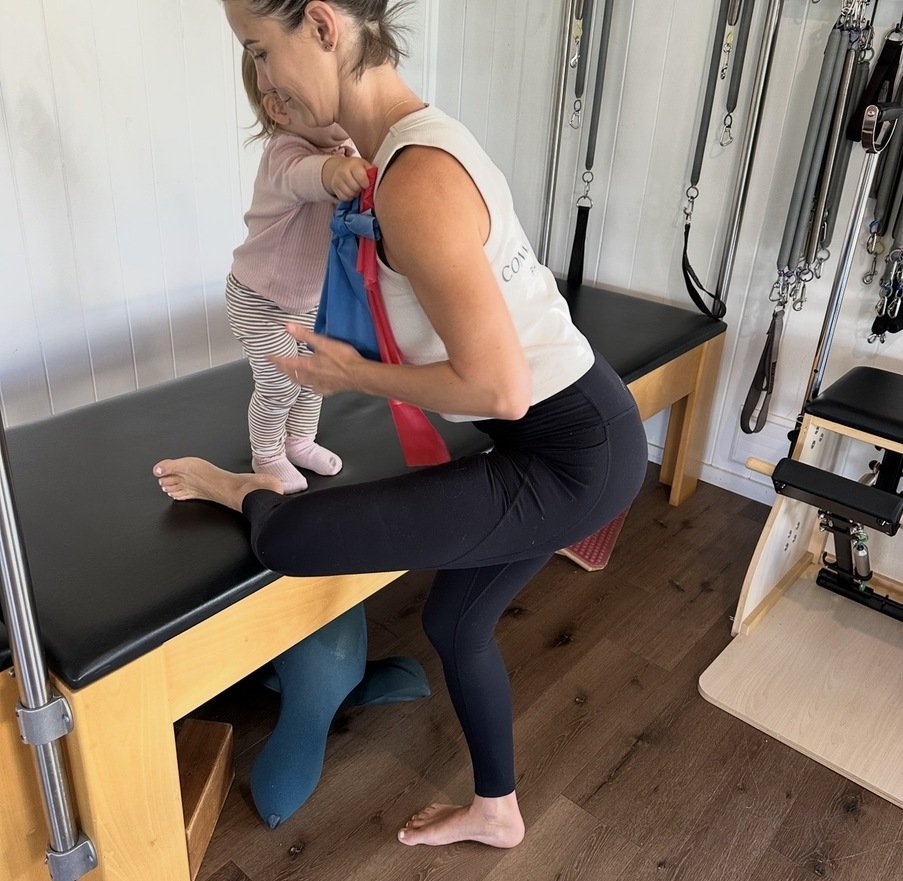
Crossing your legs is probably the single worst habit for this condition. If you spend your workday sitting crossed-legged or with one ankle resting on the opposite knee, that sustained stretch is loading and compressing the tendon for hours at a time. We see this a lot with people who work long desk days in the CBD.
Rest alone doesn't fix it either. The tendon needs the right type of load — not zero load, and not the wrong load.
Why Does It Hurt? The Simple Explanation
Think of the tendon like a ballon filled with water that wasn’t filled with water before. When the gluteal tendon is thickened and sensitised, pressing it up against the hip bone (through stretching, crossing legs, or lying without support) creates pain because it is enlarged. The more you compress it, the more reactive it becomes. It's a cycle that feels impossible to break — until you understand what's driving it.
The Good News: Gluteal Tendinopathy Responds Really Well to Physio
The research on this is very good. A targeted physiotherapy programme produces excellent outcomes for the majority of people with gluteal tendinopathy and lateral hip pain. The bad news is a good outcome is 3-4 months with the right program.
What Does Treatment Actually Look Like?
Our approach at Beyond Balance Physio follows the latest evidence and typically has two components:
1. Reduce Compression on the Tendon
Before we can load and strengthen the tendon, we need to calm it down. That means:
Sleeping with a pillow between your knees to stop the hip rolling inward all night
Avoiding crossing your legs — this is non-negotiable in the early stages
Pausing pigeon pose and deep glute stretches until the tendon settles
Being mindful of how you stand — avoid habitually resting all your weight on one hip (the "hip hanging" posture)
2. Progressive Gluteal Loading
Once compression is managed, we systematically rebuild tendon strength. This starts with gentle exercises that activate the outer glute muscles without compressing the tendon — think side-lying clams, isometric hip abduction, and standing glute work in neutral positions. From there we progressively add difficulty, resistance, and eventually return you to the activities and stretches you love.
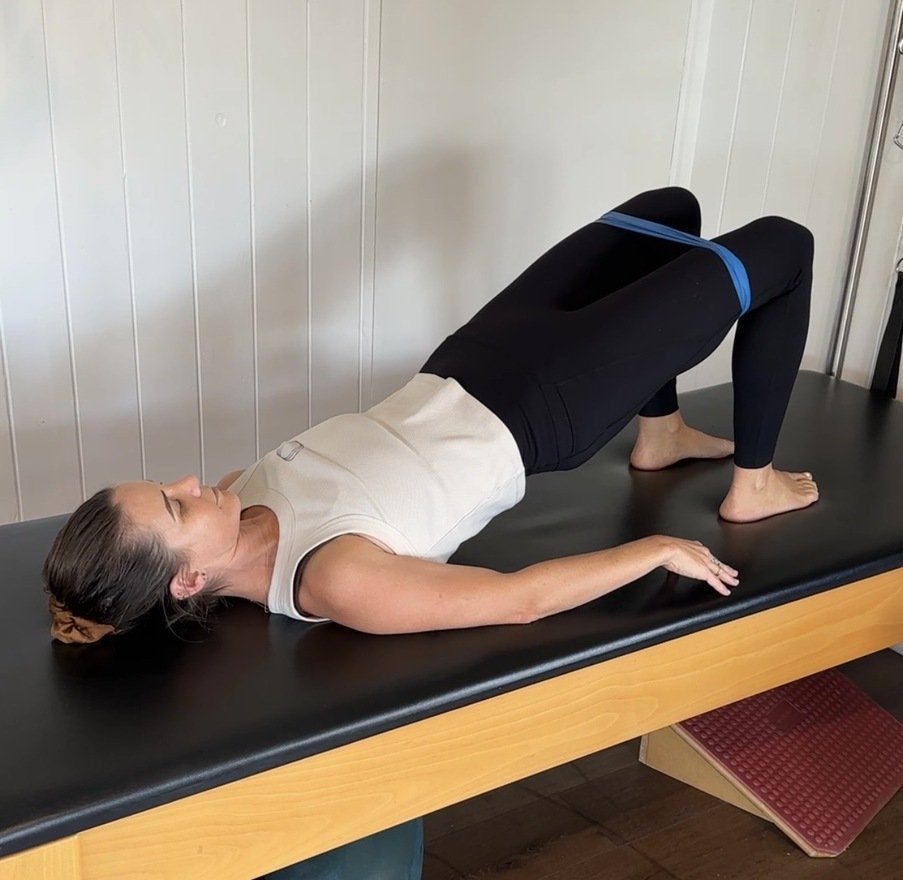
The exact programme looks different for every patient. Three people with the same diagnosis will often need three quite different exercise progressions based on their strength, posture, activity level, and how irritable their tendon is at that point.
When to See a Physio in Parnell
If you recognise yourself or a loved one in this article, we'd encourage you not to wait too long. The longer a tendon stays in a reactive, compressed state, the longer it takes to settle. Early, accurate assessment and a personalised programme is far more effective than self-managing with stretches that may be making things worse.
A physiotherapy assessment at Beyond Balance Physio in Parnell will:
Confirm whether gluteal tendinopathy / trochanteric bursitis is actually what you're dealing with (lateral hip pain has a few other causes worth ruling out)
Identify your specific aggravating habits and positions
Get you started on the right exercise programme for your stage of the condition
Give you a realistic timeline and clear milestones
You can book an assessment online — or if you know someone who's been quietly complaining about "that outside hip thing," feel free to forward this on. They'll thank you for it.